
 Last updated Nov 30, 2025





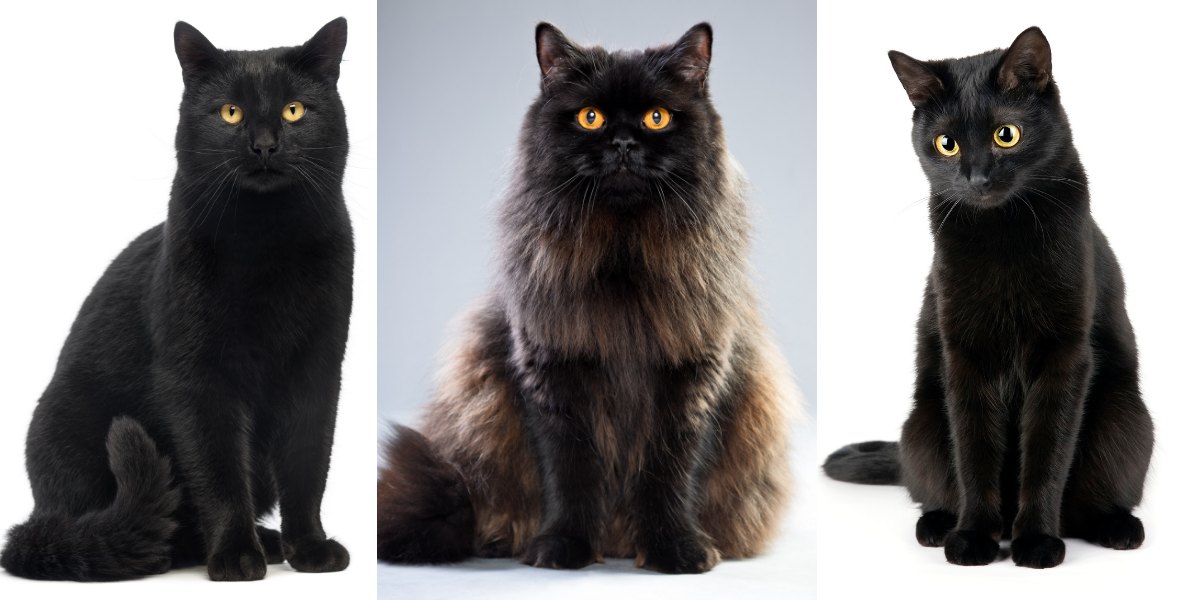 As some of the most misunderstood members of the cat world, black cats aren’t always what they seem. Some say they’re bad luck. Others see a dark-colored cat and conjure images of witches and monsters.
These unwarranted associations with all things creepy have given black cats an unfair—and flat-out wrong—reputation. In reality, black cats are friendly, loyal, and stunning. They make affectionate family members and are just as personable and social as any other colored cat.
A lot of interesting characteristics make black cats special. From their history of being worshiped to genes that might give them certain physical advantages, there is plenty to love about these inky-colored cats. Here are 7 little-known facts about black cats.
1. Black Is the Most Dominant Cat Color
Cat color is always dependent on genes. Every cat gets two sets of color-coding genes, one from each parent. Some colors are recessive and some are dominant. Without pulling out your high school biology notes, the basic explanation is that some color genes override others and make it more likely for a cat to have that colored fur.
When it comes to black cats, the gene that codes for black fur is the most dominant of all the possible fur colors. If two cats each possess the gene for black fur (even if they aren’t black themselves) and they reproduce, their offspring will be black.
Even if only one parent has the gene, there is still a high probability for black kittens. The gene for black fur even overrides the gene that calls for the common tabby pattern. As a result, there are more black cats than any other color.
2. Black Fur Can Hide Patterns
Black cats are the most common of all cats, but not every dark-colored cat you see is truly solid black. The gene for black fur has the power to repress the gene for the tabby coat pattern, but it doesn’t delete it. In cats that only have one black fur gene, the tabby pattern might still be there. Often called “undercover tabbies,” these black cats actually have subtle stripes, swirls, or spots. When you look at them in certain lighting or at certain angles, you can see that the tabby gene hasn’t been completely overridden.
3. Black Cats Can Color-Change
In addition to having undercover coat patterns, some black cats even change color. When an outside cat spends a significant amount of time basking in the sun, the UV rays can break down the black pigment of their fur. This is called “rusting” and results in a cat turning a rusty brownish-red color with age. This color phenomenon often helps reveal the tabby coat pattern that was hiding underneath that dark fur.
4. Not All Black Cats Are the Same Breed
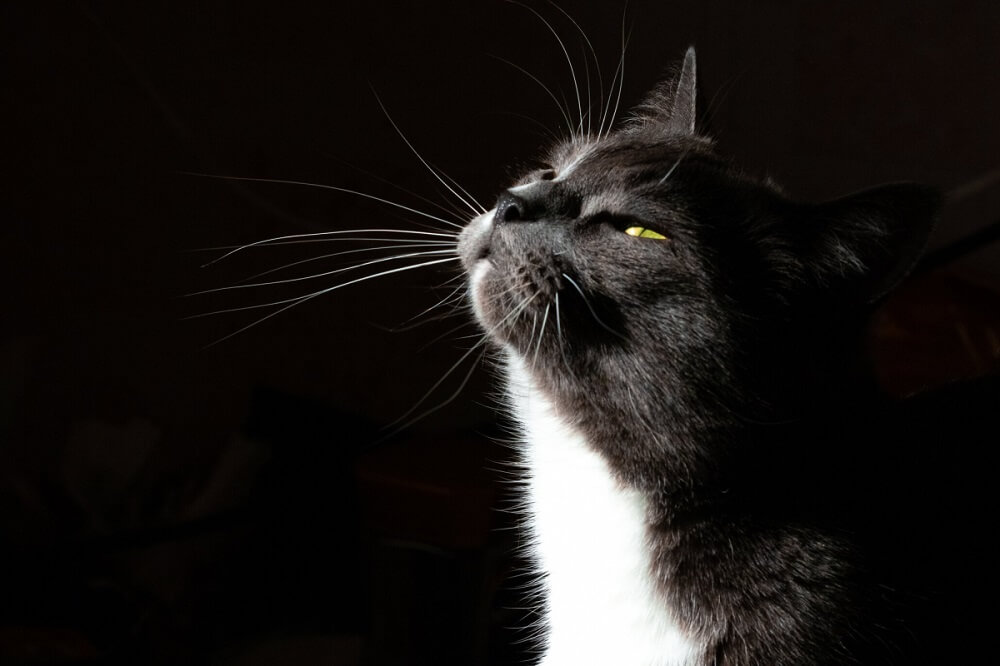
Black cats can vary in terms of their characteristics, temperament, and physical traits.
Another misunderstanding about black cats is that they’re all the same breed. In fact, 20 to 30 cat breeds can come in solid black. The most renowned black cat breed is the Bombay. These short-haired, solid-colored cats were bred to look like miniature black panthers. They’re the only breed that is always solid black; no other colors are accepted in the Bombay breed standard.
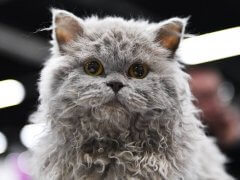
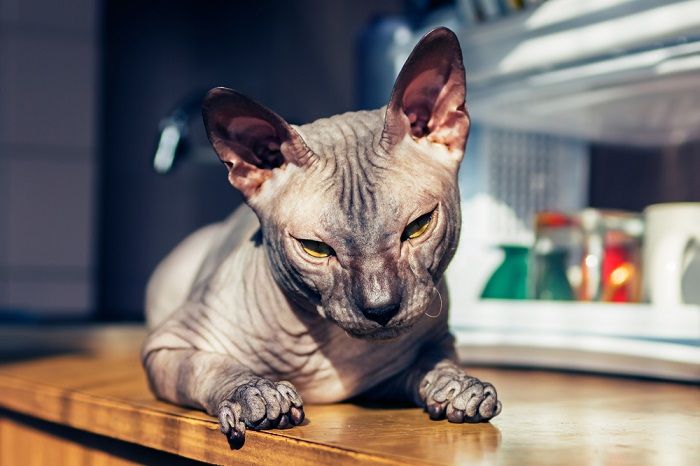
In addition to the Bombay, the American Bobtail, Ragamuffin, Sphynx, Persian, Scottish Fold, and several other breeds have black fur. Black fur is also common for mixed breed cats. Some black cats have long, fluffy fur, and others are short-haired and sleek-looking.
5. Black Cats Are Associated with Luck
There’s no clear origin to the idea that black cats bring bad luck. This unfounded belief most likely developed over centuries through various European folk superstitions, rather than from any single myth or story.
In 1233, Pope Gregory IX issued a papal bull condemning certain heretical rituals in Germany, which reportedly involved black cats. One man’s righteous declaration may have led to centuries of misinformation.
Black cats haven’t always been scorned, however. There were some places and some time periods where black cats were considered good luck. In Japan, black cats are traditionally seen as symbols of good luck, often associated with prosperity and attracting true love.
Many European sailors also considered black cats good luck and often sought them out to bring onboard their ships. The sailors’ wives also kept black cats at home to help ensure their husbands made it home safely. They loved black cats and considered them friendly, affectionate, and loving as cats of any other color.
6. Black Cats Are Worth Worshiping
Black cat myths and facts go back thousands of years. In some ancient cultures, cats were considered sacred or even divine. In Ancient Egypt, the goddess Bastet protected women and crops. She was sometimes depicted as a woman with a cat’s head, which could appear black, though the color varied. Cats were revered throughout the community, and killing one—regardless of its color—was a serious crime.
7. Black Cats Might Be Healthier
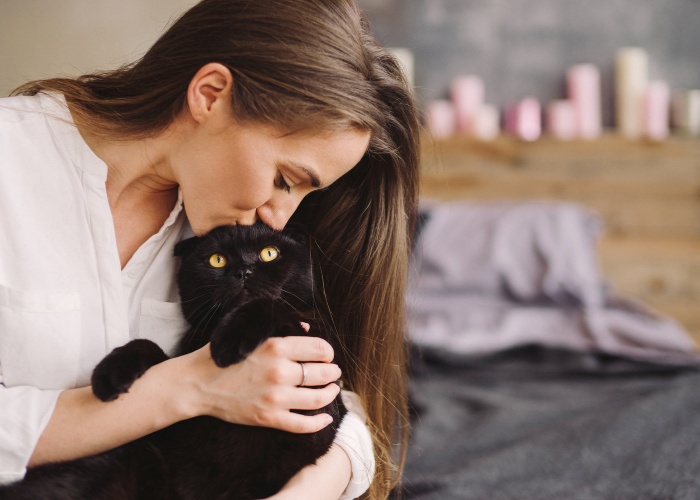
Research has found that the gene that codes for black fur color is associated with the immune system.
Black cats have endured more than their fair share of defamation, but their genetics might provide certain physical advantages that other cats lack. Some studies suggest that the genes associated with black fur might have links to certain immune system functions, though scientists are still exploring whether this has any evolutionary significance or is simply a coincidence.
The perception that black cats are mostly male might stem from historical superstitions or cultural beliefs rather than actual population statistics.
Society isn’t always kind to black cats, but they’re lovable pets that deserve good homes just as much as any other cat.
-
https://www.ambassadoranimalgreenville.com/myths-and-facts-about-black-cats/





I have had black cats all my life. I believe they are the most loving, cuddly, loyal cats out there. They have received an unfair reputation. I live in the country and people drop cats off all the time at my barn. I am currently up to 11 cats, 7 of them being black and typically 5 out of the 7 sleep with me every night, 1 literally on top of me. They love to be around me, love attention and are very well behaved. I love all my cats, but I know for sure I will always have a black cat as long as I can care for them.
I recently watched your video on orange cats. My daughter and I both have one, she has a female and I have a male. Both are manx. Both are as you described, the female is smaller than average and the male is larger than average ( however he is part maine coon). They both do not fit the orange cats features; they are shy, non aggressive, non affectionate creatures. I have breed manx cats since the 80’s and never had any cats like these before. We know that they love us because they follow us around and demand our attention but they just don’t want to be too close like our other cats. That went in the shower and bath with us. And had to go in the car like our dog did. They are both very stand offish even for a regular cat.
I had an all black kitty that was just a tiny kitten when she showed up at our house. I took her in and she lived with us till she was 20 yrs old. beautiful kitty. She was smart and loved to be loved and held. I miss her so much but I do know she had a great life with us. Salem you were the best little girl.
I’ve had the pleasure of owning 3 black cats. While each cat had it’s particular traits, all of mine have been loving & beautiful. Two of my black cats could’ve been twins in appearance & personality. Both were quite laid back, very little meowing & purr loudly & often for a variety of reasons. One was a male that loved people but would become very defensive & aggressive towards people they sensed as threats. He’d be sleeping quietly, calmly, but let a stranger come in they sensed as bad, he’d hiss, raise his back & essentially go after them. The female black cat loves everyone, seeks being pet. My third black cat is sleeker than the other two, willowy, sneakier & loves to chew on everything-blind strings, match sticks, fake & real plants, often doing anything repeatedly regardless of her “punishment”. Her least favorite one is the water squirt gun. All I have to do is pick it up to have her run to safety & out of whatever she shouldn’t be in. She’s very loving & beautiful also, but gets sassy, and talks/meows a lot. She hides when new people come under something, doesn’t like being approached, and can become more aggressive to let you know to stop whatever you’re doing. I have loved each of my black cats, and as long as I feel I can care for a cat, it’ll be a black cat.
What good timing. Im actually in the process to adopt a black kitten. I specifically looked for a black one cause of the stigma around them leading to low adoption rates.